Astrophotography
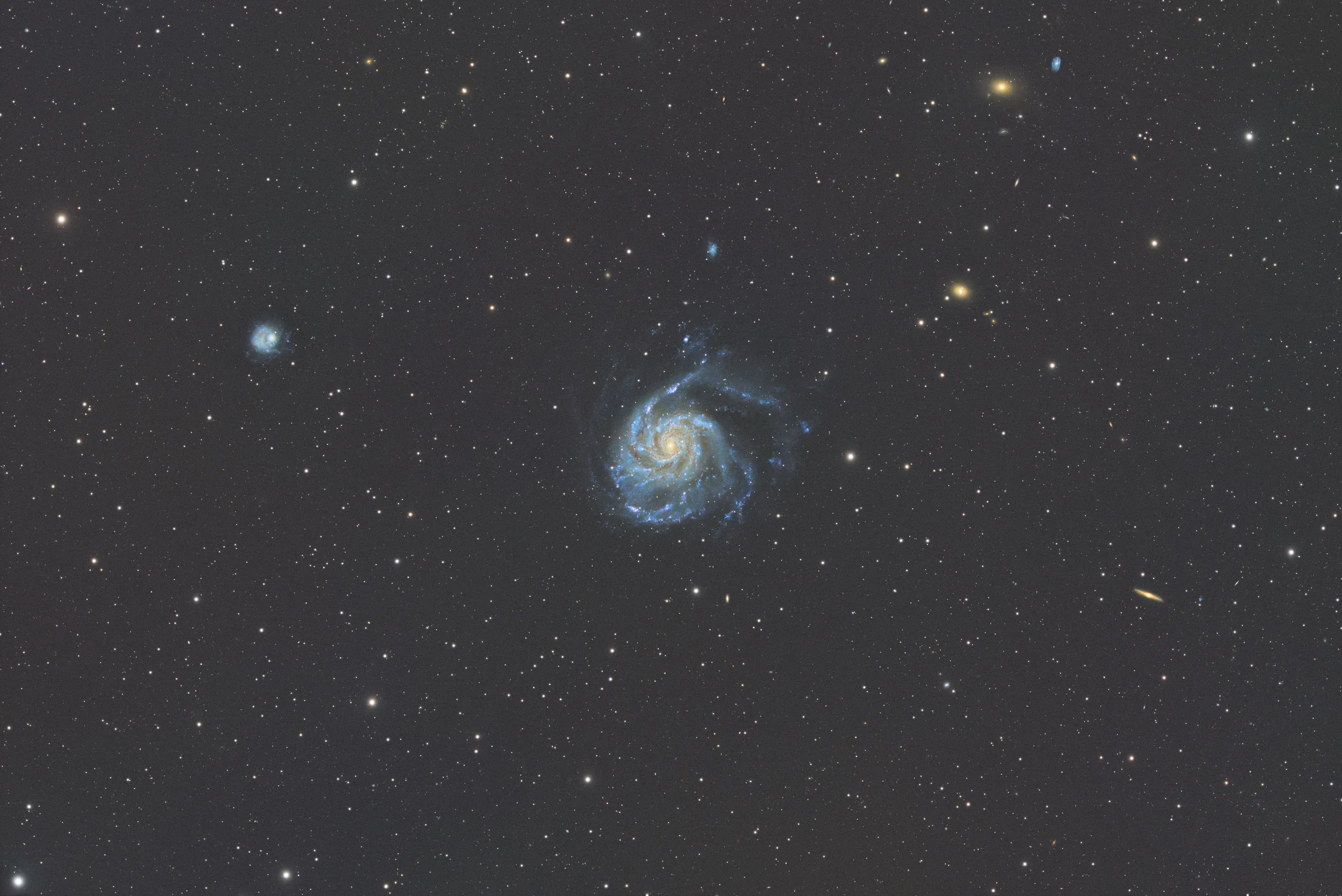
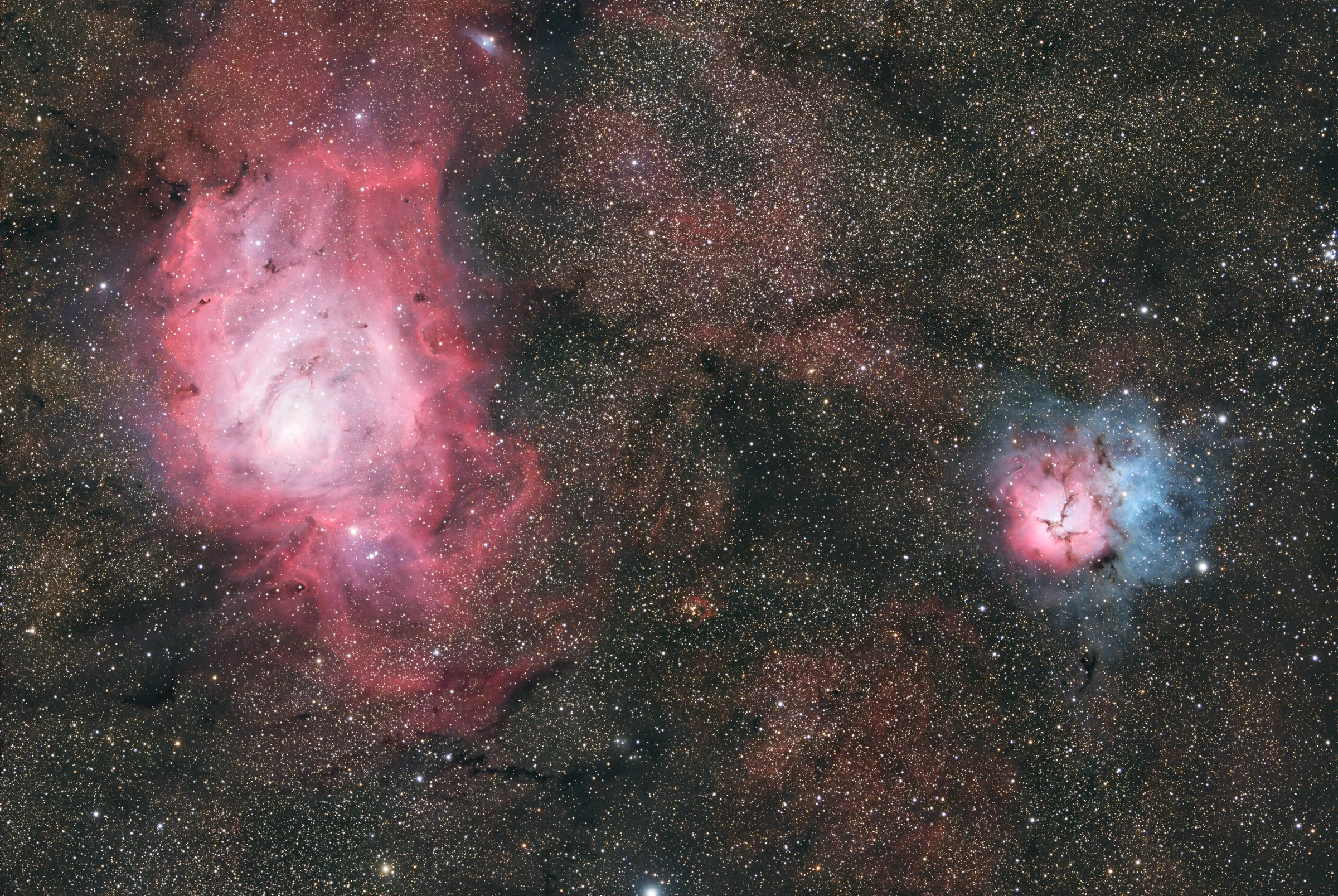
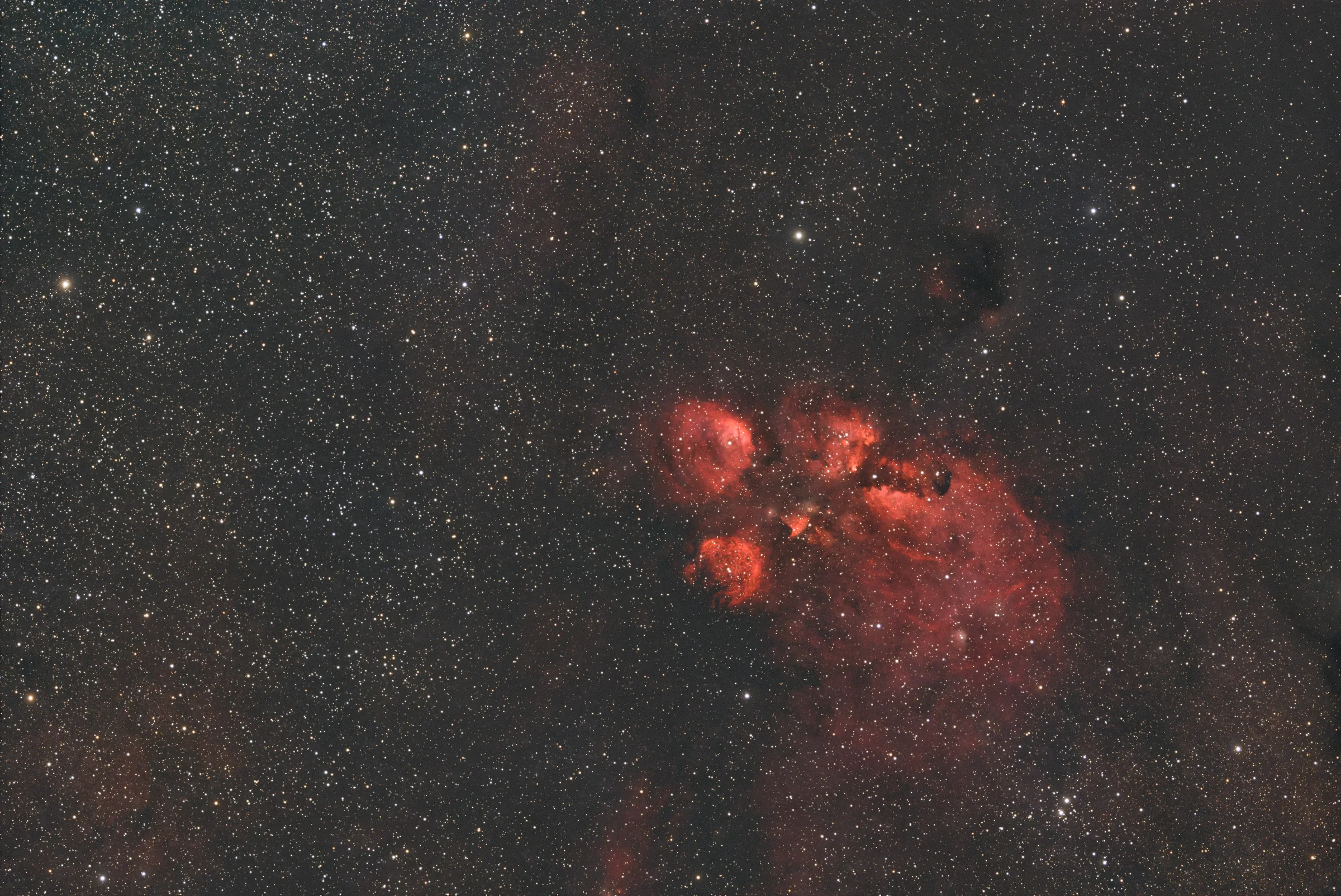
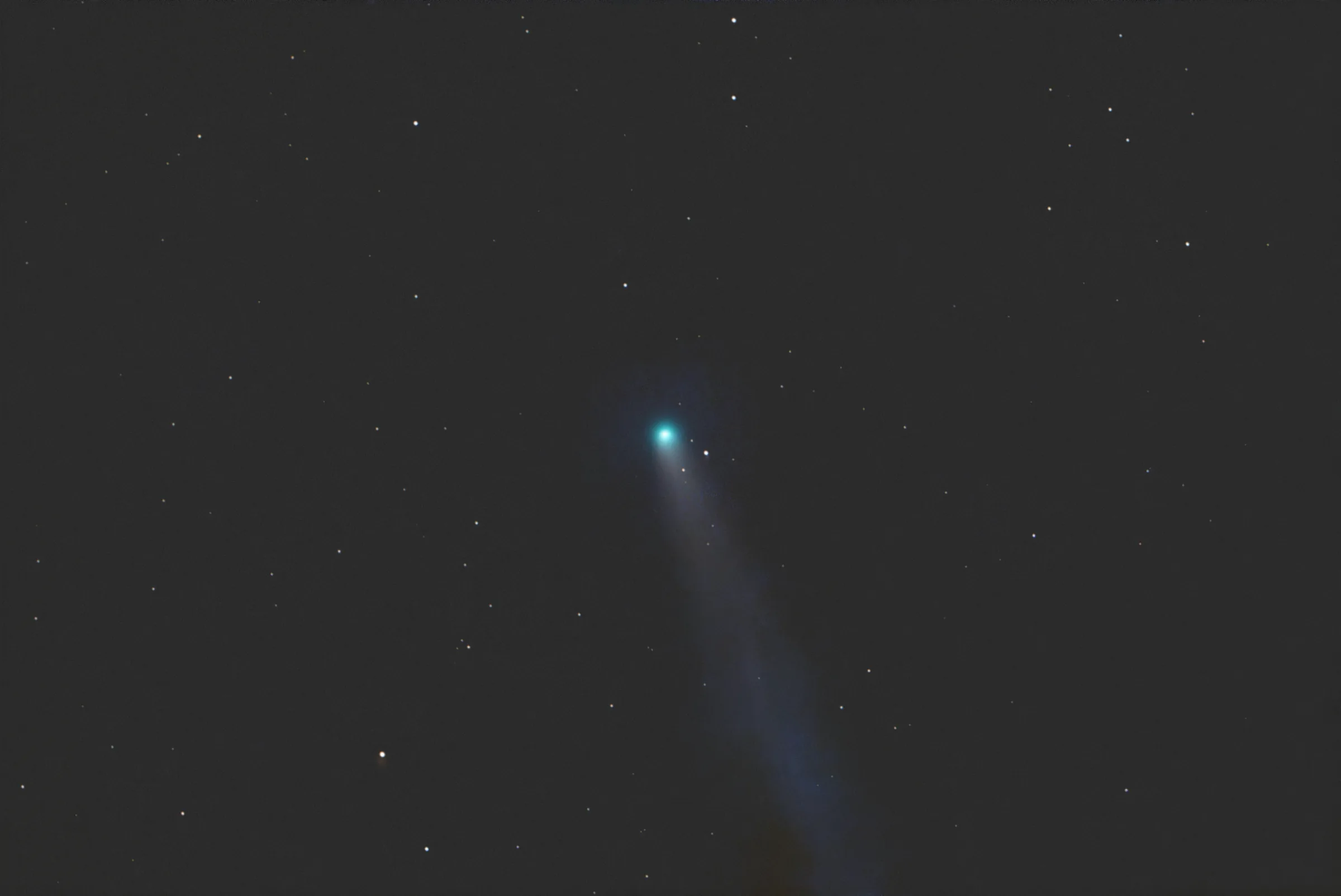
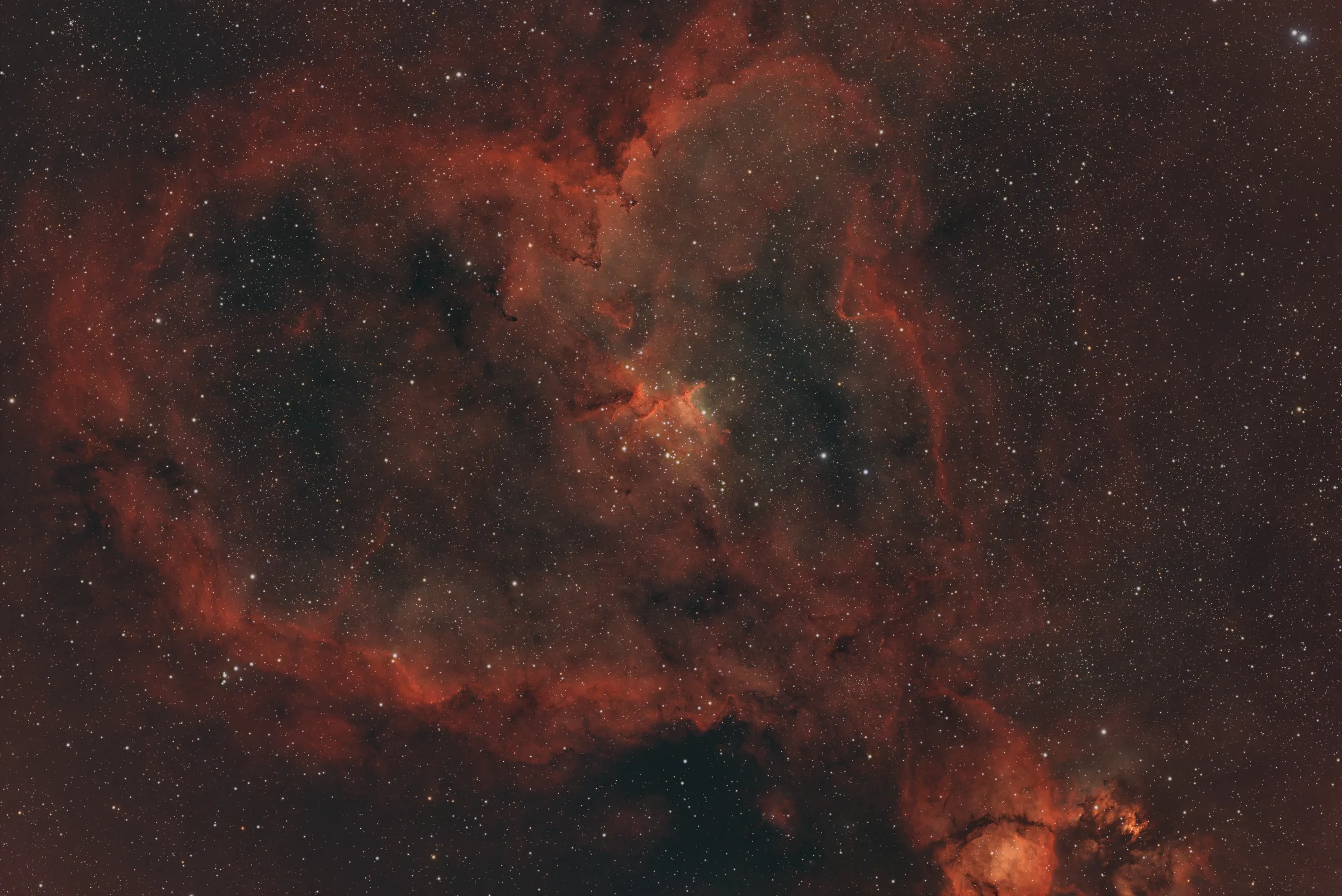
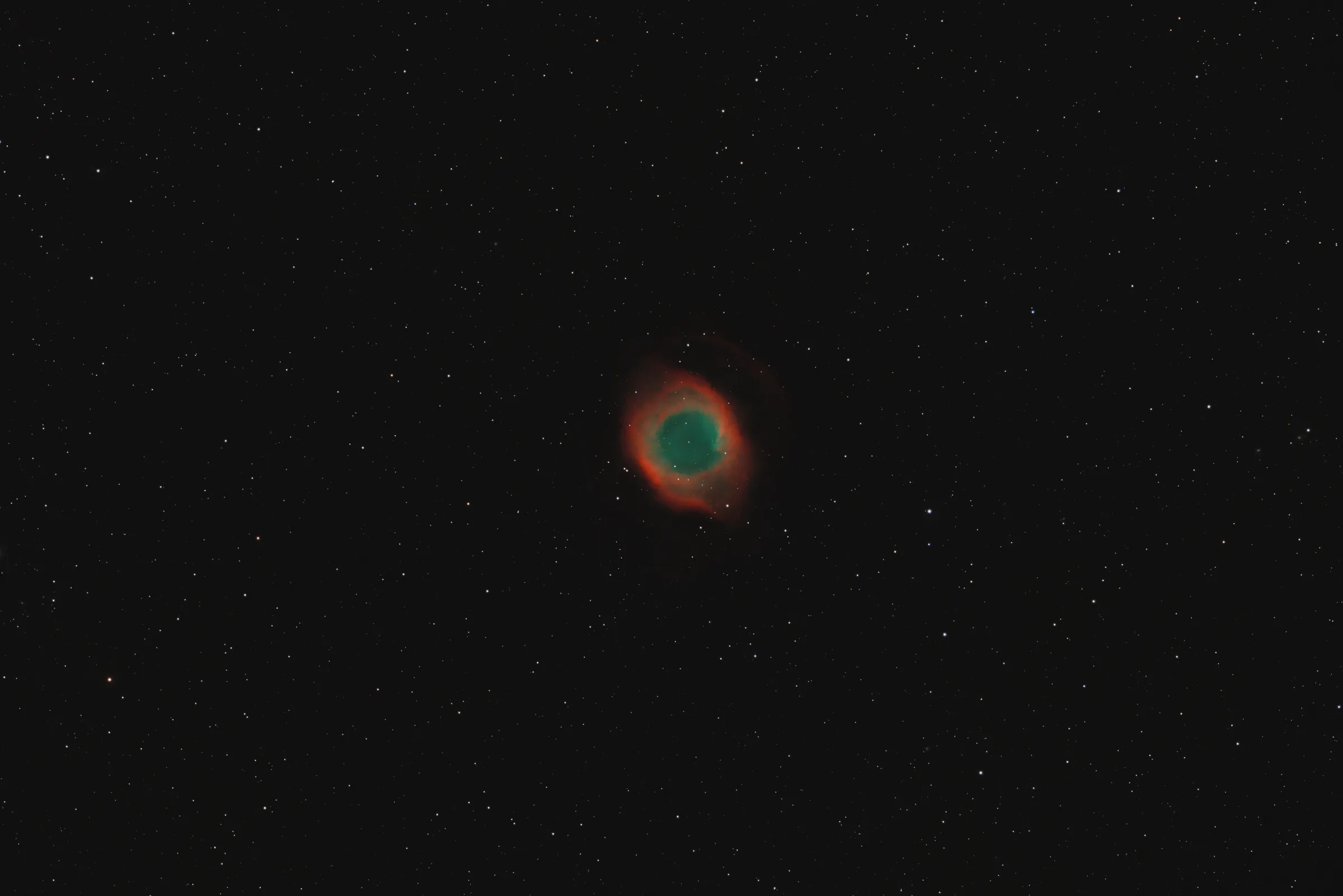
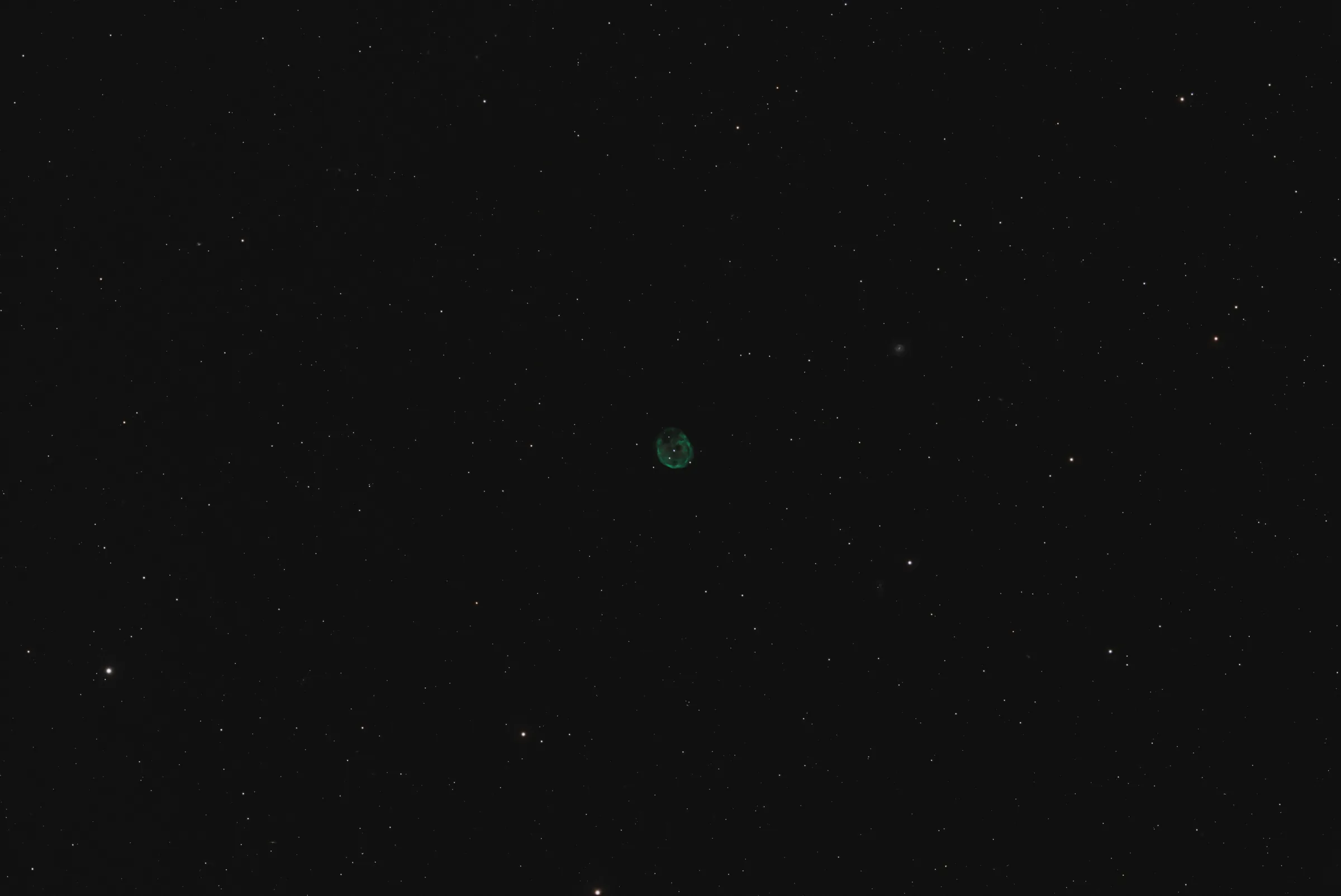
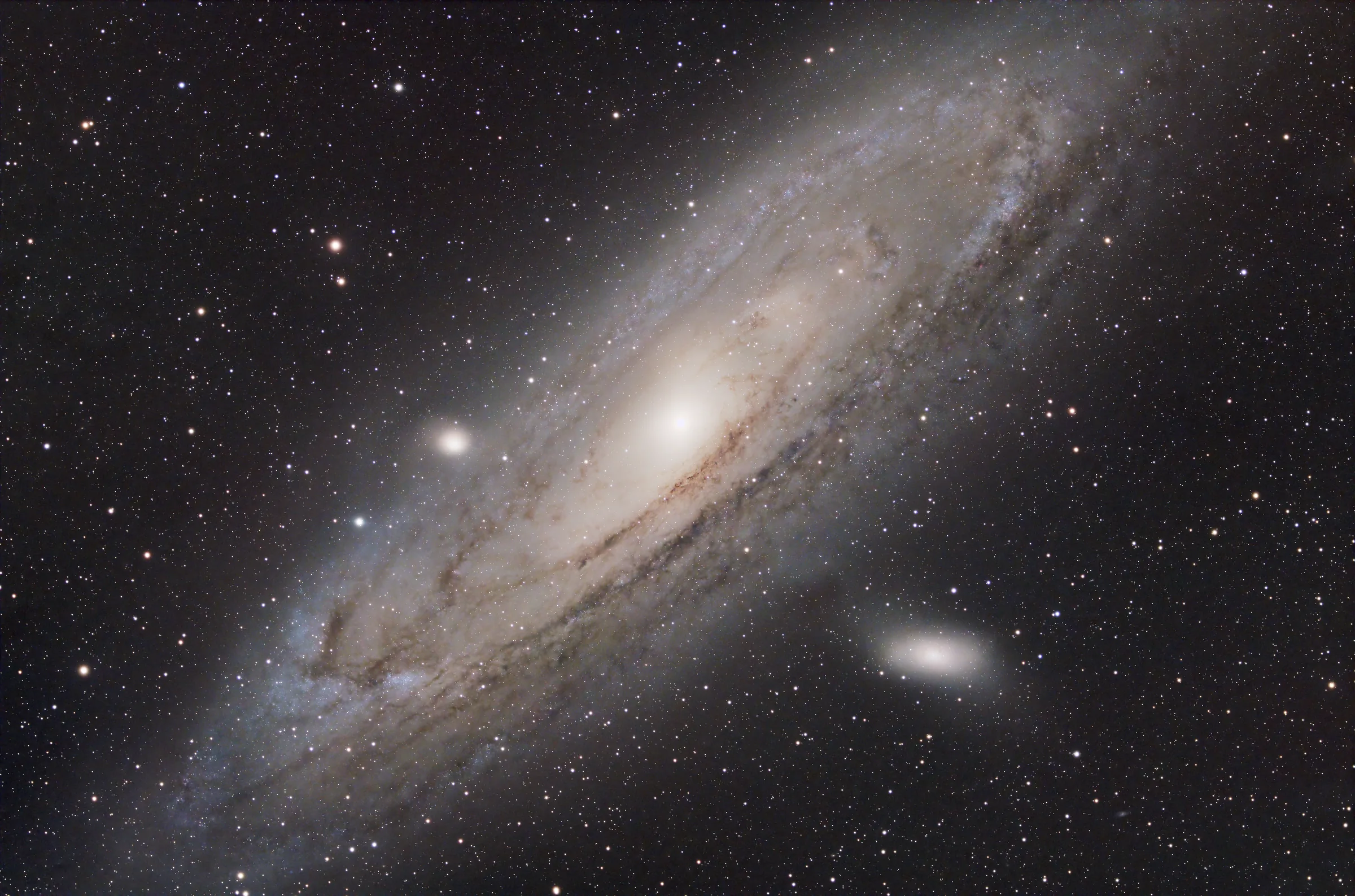
Deep-sky imaging is what I do with clear nights. Each frame below is a stack of calibrated subexposures — darks for sensor noise, flats for vignetting and dust, bias for the read floor — registered and integrated until the signal climbs out of the noise.
It is the same problem I work on in the lab, with a different carrier: a faint signal, a noisy channel, and enough averaging to recover structure that no single measurement shows. Back to research.
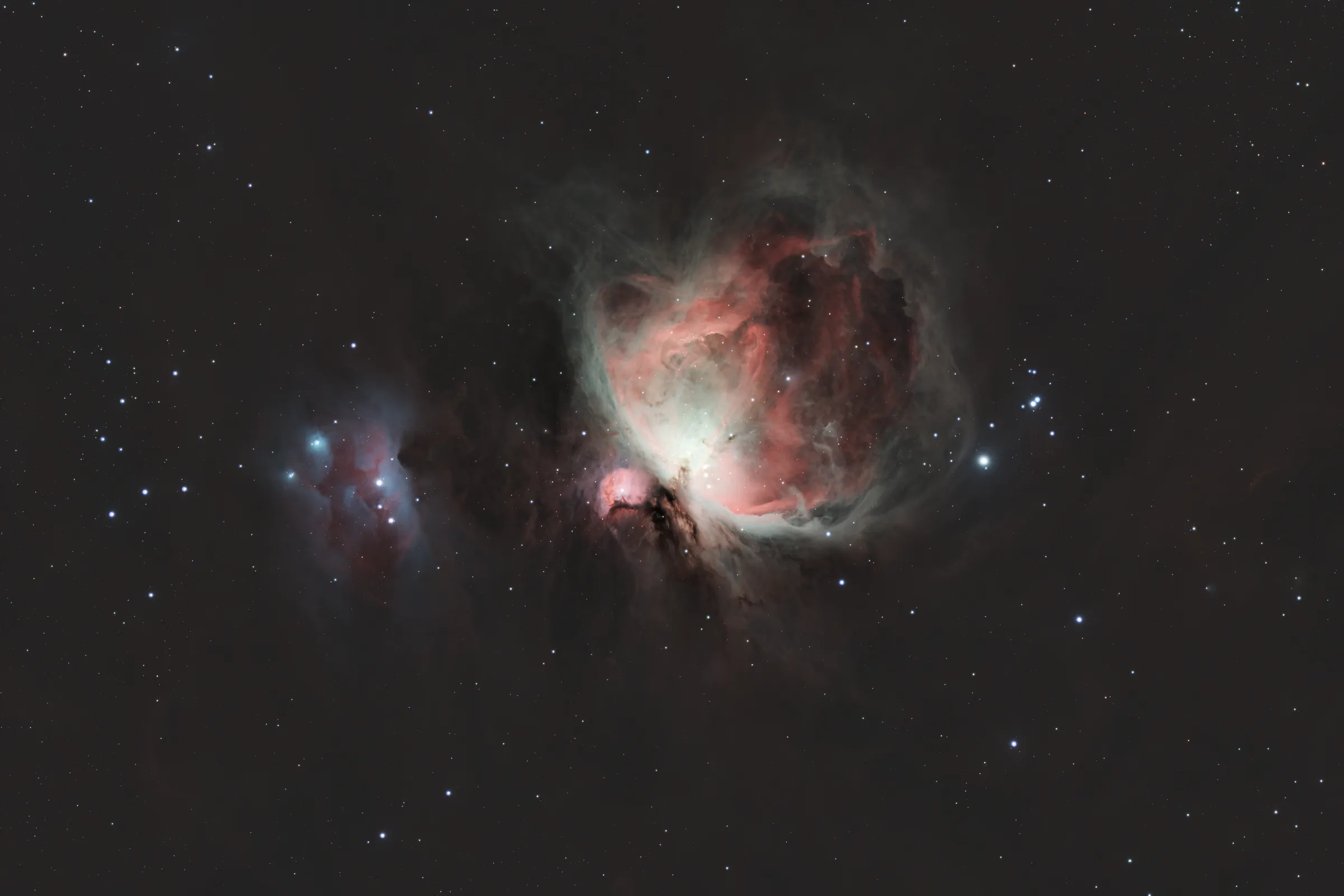
The rig
- Imaging camera
- ZWO ASI2600MC Air — 6248 × 4176, 3.76 µm pixels, RGGB
- Guide camera
- ZWO ASI220MM Air
- Mount control
- OnStep
- Focal length
- 559–563 mm
- Capture settings
- gain 100, offset 50, bin 1, sensor cooled to 0 … −10 °C
- Calibration
- dark, flat and bias masters per session
Frames are plate-solved at capture, so each one carries its own astrometric solution rather than an estimated pointing.